

What Is a Creator Platform and Why Does Cameroon Need One?
Most people in Cameroon have heard the word "platform" thrown around online. But very few understand what a creator platform actually is, what it does, and why having one built specifically for Cameroon changes everything. This is the clearest explanation you will find — and by the end, you will understand exactly why this matters for your future.
What Is a Creator Platform and Why Does Cameroon Need One?

There is a word that gets used a lot in tech and entrepreneurship circles.
Platform.
Everyone says it. Few people explain it properly. And when the conversation gets to Africa to Cameroon specifically the explanation almost never happens at all.
So let us fix that today.
Because understanding what a creator platform is, what it actually does, and why Cameroon needs one built for its own reality that understanding could change the direction of your career, your business, and your income.
First What Is a Creator?
Before we talk about platforms, let us define who a creator is.
A creator is anyone who produces knowledge, skill, or content that other people find valuable enough to pay attention to or pay money for.
That definition is broader than most people expect.
A creator is not just a YouTuber or an Instagram influencer.
A creator is:
The accountant in Douala who knows how to help small businesses file taxes correctly and wants to teach that online. The developer in Buea who has mastered React and wants to package that into a structured course. The makeup artist in Yaoundé who has built a loyal following and wants to sell a technique masterclass. The teacher in Bamenda who has been preparing students for GCE exams for fifteen years and wants to reach students beyond their classroom. The fitness coach, the business consultant, the language tutor, the graphic designer anyone with real knowledge and a willing audience.
If you have something valuable to teach, share, or sell you are a creator. Whether you know it or not.
So What Is a Creator Platform?
A creator platform is a technology infrastructure that allows creators to build, sell, and deliver their knowledge products to an audience all in one place.
It is not just a website builder. It is not just a payment tool. It is not just a course hosting service.
A true creator platform combines all of the following:
A storefront where your products live and where buyers can find and purchase them professionally.
A content delivery system where your courses, videos, PDFs, audio lessons, or live sessions are hosted and delivered to students in a structured, organized way.
A payment system that accepts the payment methods your audience actually uses, processes transactions securely, and sends money to you reliably.
A student management system that tracks who enrolled, how far they have progressed, whether they completed the course, and what certificates they have earned.
A marketing and growth layer tools like affiliate programs, email broadcasts, lead capture pages, flash sales, and discount codes that help you attract and convert buyers.
An analytics dashboard so you can see what is working, who is buying, where your students come from, and how your revenue is growing over time.
When all of these pieces work together seamlessly that is a creator platform.
It is the difference between a street vendor who sells one item at a time and a properly structured business with a storefront, inventory management, customer records, and a sales team.
What Cameroon Has Been Using Instead
Here is the honest reality of how most Cameroonian knowledge sellers have been operating.
They teach on WhatsApp sending lessons into groups with no structure, no tracking, and no payment system attached. They sell via direct messages manually confirming payments, manually sending content, manually following up with every single buyer. They use global platforms that do not accept MoMo which means they either lose sales from buyers who have no international card, or they create complicated workarounds that frustrate everyone.
They operate informally no receipts, no certificates, no professional presence, no scalable system.
The result is a massive amount of talent, knowledge, and effort producing far less income and impact than it should.
This is not a talent problem.
This is an infrastructure problem.
Cameroon has never had a creator platform built specifically for its payment systems, its languages, its creators, and its learners.
Until now.
Why Cameroon Specifically Needs Its Own Creator Platform
Some people ask: "Why can't Cameroonian creators just use Teachable, Gumroad, or Udemy?"
It is a fair question. Let us answer it honestly.
Payment exclusion. The majority of Cameroonians do not have international credit or debit cards.
MTN Mobile Money and Orange Money are the dominant payment systems in the country used by millions of people for daily transactions. Most global creator platforms do not support MoMo. That single fact excludes the majority of your potential Cameroonian audience from ever being able to pay you.
Currency and pricing mismatch. Global platforms price in dollars or euros. A course priced at $29 becomes over 17,000 FCFA which sounds expensive to a student in Cameroon even if the content is worth five times that. Pricing in FCFA, at amounts that reflect local purchasing power, is not just a preference. It is a strategic necessity.
Language barriers. Cameroon is officially bilingual. A platform that serves only English or only French automatically cuts off half the country. A truly Cameroonian platform must speak both languages fluently at the product level, not just in the marketing.
No local support or context. When a creator on a global platform has a problem, they navigate generic support systems designed for users in the United States or Europe. There is no understanding of local context, local payment issues, or local user behavior. The support experience is frustrating and often useless.
Fee structures that punish early-stage creators. Many global platforms charge annual subscription fees, revenue cuts of 30 to 50 percent, or both. For a Cameroonian creator just starting out, those numbers make the economics of building a knowledge business nearly impossible.
A creator platform built for Cameroon solves all of these problems by design not as an afterthought.
What a Cameroonian Creator Platform Makes Possible
When the right infrastructure exists, something remarkable happens.
The teacher who was sending WhatsApp PDFs for free can now build a structured course, price it honestly in FCFA, accept MoMo payments, and earn a sustainable monthly income from their expertise.
The developer who spent three years learning to code can now package that knowledge, launch a course, and earn money from it passively while continuing to work on their own projects.
The student who wanted to learn graphic design but could not afford a dollar-priced subscription can now access a quality course in French or English, priced at an amount they can actually pay, with a certificate at the end that means something.
The affiliate who has no product of their own can promote courses on the platform, earn commissions via MoMo, and build an income stream without creating anything from scratch.
This is the transformation a creator platform enables.
Not just for individual creators but for the entire knowledge economy of a country.
The Bigger Opportunity
The global creator economy is currently valued at over $250 billion and growing.
Africa's share of that economy is still small not because Africans lack knowledge or creativity, but because the infrastructure to monetize that knowledge at scale has not existed on the continent.
That is changing.
And Cameroon with its bilingual educated population, its deep mobile money penetration, its growing tech ecosystem, and its community of hungry, talented young people is one of the best-positioned countries in Africa to lead that shift.
But only if the tools exist.
Only if there is a platform that was built for this reality.
Skilldera is that platform.
It was not adapted from a foreign model. It was built from the ground up with the Cameroonian creator in mind their payment systems, their languages, their ambitions, and their audience.
What This Means for You
Whether you are a creator, a student, or someone thinking about both the arrival of a true creator platform in Cameroon is not a small thing.
It means the knowledge you have been giving away for free now has a home where it can generate real income.
It means the skills you want to learn are now accessible at prices you can actually pay, through payment methods you actually use.
It means the gap between what you know and what you earn from what you know that gap is now closable.
The infrastructure is here.
The only question is whether you will use it.
👉 Join Skilldera and be part of what is being built: skilldera.co/auth/signup
Keep reading
 Guides / Tutorials (o…
How to Create Your Skilldera Account: A Step-by-Step Guide for African Creators, Affiliates, and Learners.
Ready to start selling on Skilldera? Here's a step-by-step walkthrough — from your first search to your live dashboard — covering sign-up, choosing your role, and setting up your creator storefront with Mobile Money payouts. No card, no stress — just MoMo. This guide walks you through creating your Skilldera account in minutes, whether you're joining as a Creator, Affiliate, or Student.
 Student Founders +5
Why We Built Skilldera in Cameroon — The Story Behind Africa's Creator Platform
Most platforms were not built for us. The payments didn't work. The language wasn't ours. The infrastructure assumed we had what we didn't. So we stopped waiting for someone else to solve it — and built Skilldera. This is the story of why, and what we're building for every knowledge seller in Cameroon and beyond.
 Creator Economy +5
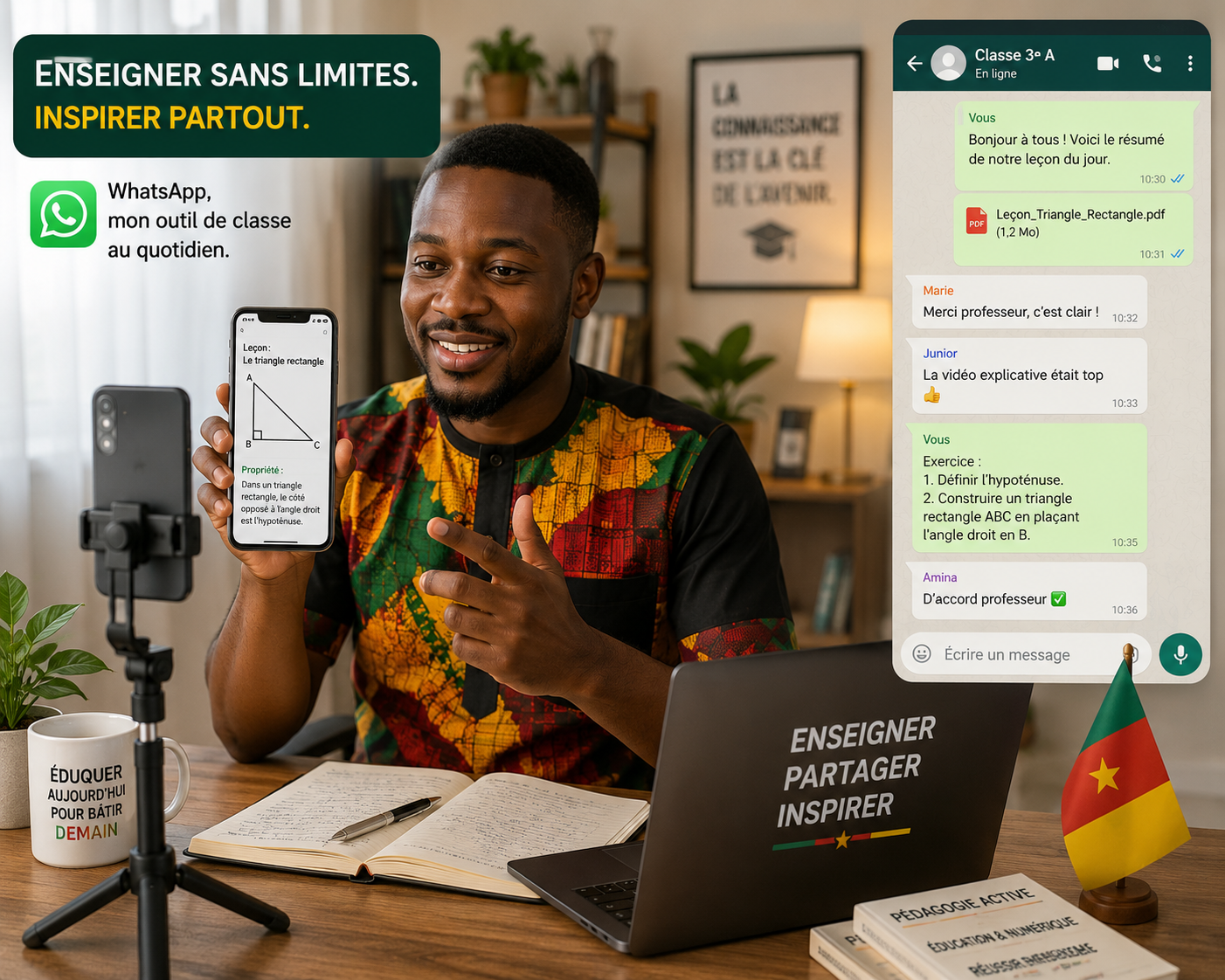
The Cameroonian WhatsApp Teacher: How to Turn Your Free Group into a Paid Business
You have been teaching for free on WhatsApp for months — maybe years. Sending notes, answering questions, sharing voice messages at midnight because someone needed help. Your knowledge is real. Your impact is real. The only thing missing is a system that pays you for it. Here is exactly how to make that shift.